
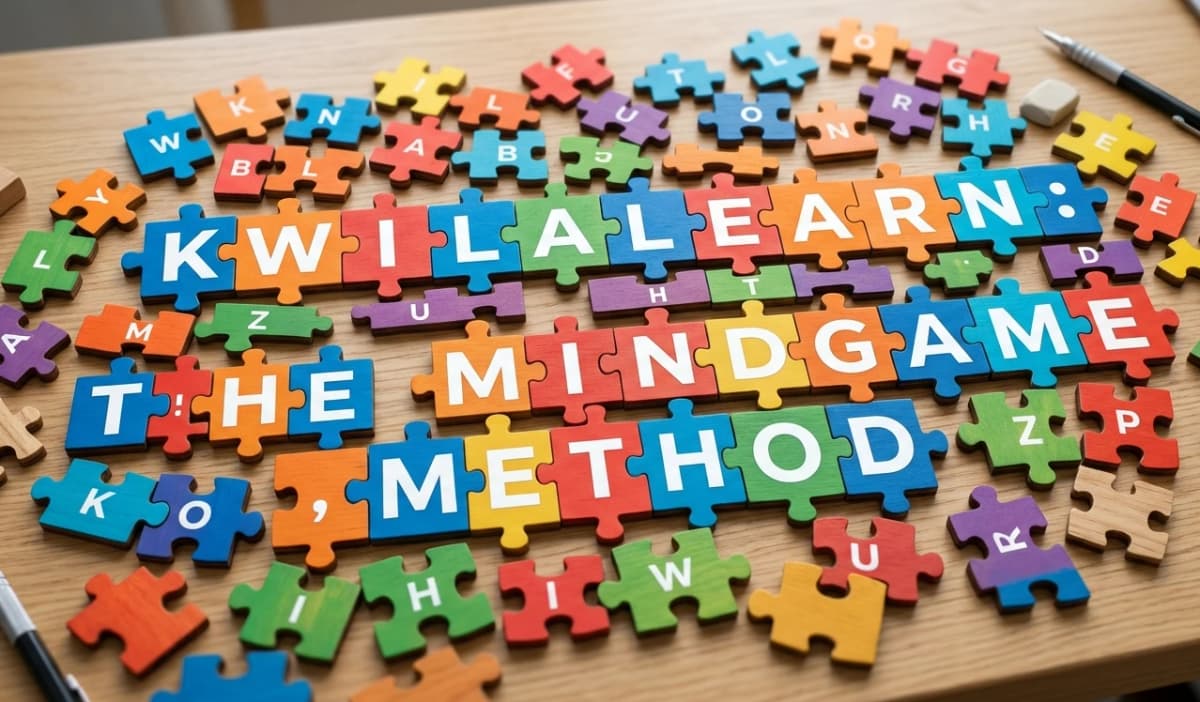
Mastering vocabulary is more than just memorizing pairs of words; it is about building neural pathways that last. By slowing down and engaging with the 'unusual' part of the process, you can transform a tedious task into a deep-dive mastery session. Discover the three-step logic behind the Kwila method.
The KwilaLearn workflow is straightforward: choose your base and target languages,
pick a topic, and write your text. But after the platform generates your translation,
audio, and grammar notes, you reach the "unusual part."
At KwilaLearn, we ask you to do something counter-cultural: Slow down.
Before jumping into exercises, you should read the translation and grammar notes multiple
times and listen closely to the audio.
I know, we live in a high-speed era. We are used to instant dopamine rushes: 10-second videos and 2-minute “learning” sessions.
But real mastery requires a deep dive.
The Three-Step Mastery Cycle
KwilaLearn offers a unique, three-step session designed to move words from your short-term memory into your long-term intuition.
Step 1: Unscramble the Puzzle

The first and last letters remain in place, but the center is scrambled. You have to type the original word. It’s like a puzzle; you recognize the edges immediately, but your brain has to “sort” the internal pile of characters to find the meaning.
Step 2: Fill the Gaps
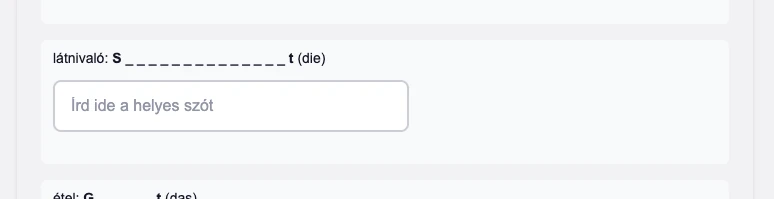
The first and last letters are there, but the rest are replaced with underscores (_). This is the mental game from our childhood: “I’m thinking of a word that starts with A and ends with L…”
Step 3: The Recall Challenge
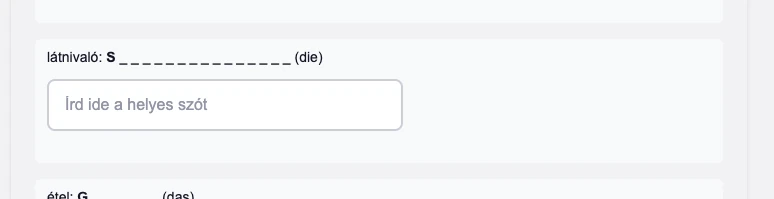
Finally, you are given only the first letter. This simulates the daily struggle of every language learner: “I know this word... it starts with C!” By the time you finish this step, the word is no longer a stranger.
The Philosophy of Connection
You aren’t just memorizing; you are playing. It isn't just about connecting the Hungarian ”látnivaló” to the German ”Sehenswürdigkeit” (die). Your brain is forced to recreate that connection in three distinct, increasingly difficult ways.